Holt Antiques at Walsingham Mill
A Rare Surviving Pair of Late 17th - Early 18th Century Antique Wooden Pattens with Original Iron Rings and Leather Straps
A Rare Surviving Pair of Late 17th - Early 18th Century Antique Wooden Pattens with Original Iron Rings and Leather Straps
Proud to be members of


Couldn't load pickup availability
A Rare Surviving Pair of Antique Wooden Pattens with Original Iron Rings and Leather Straps.
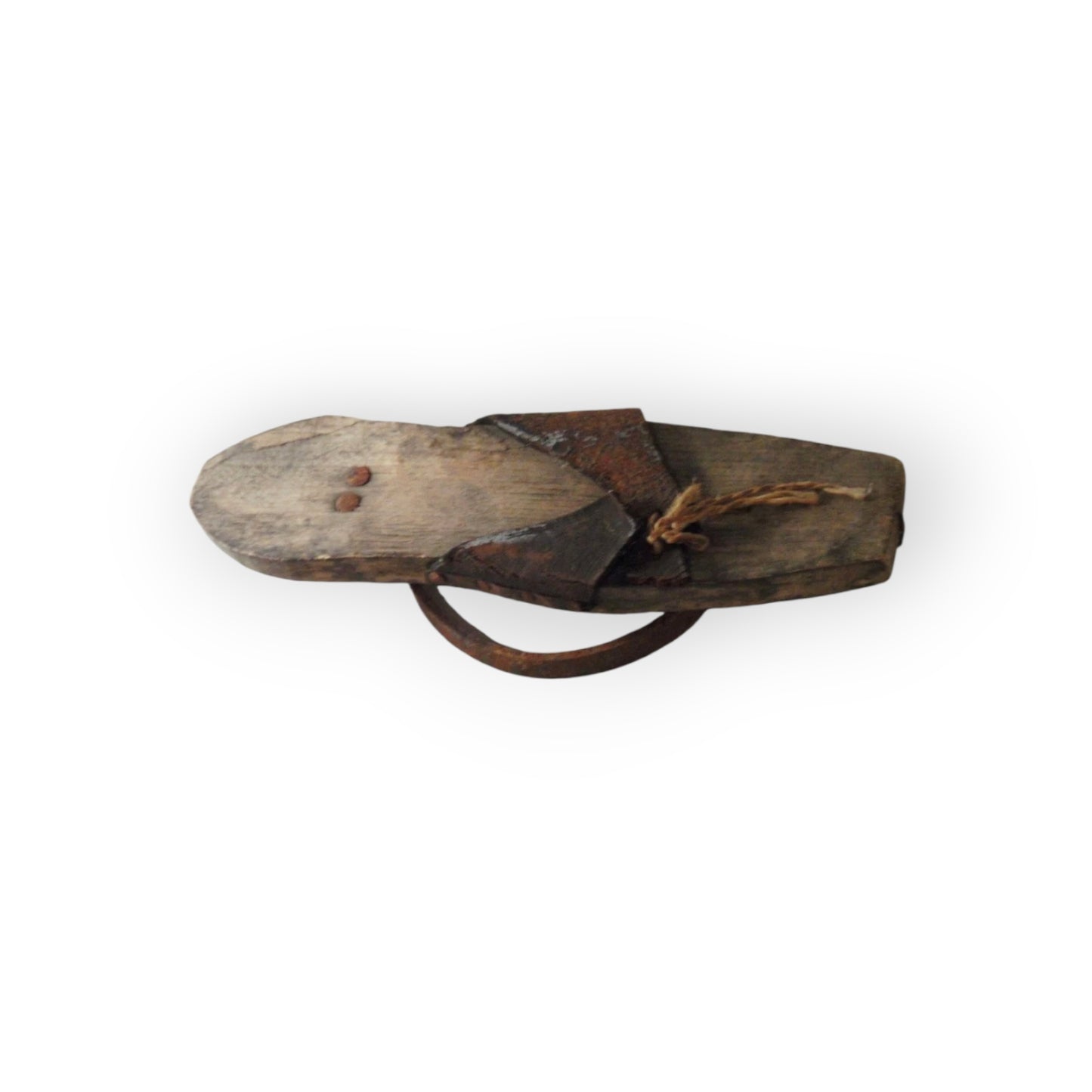
A remarkable and genuinely rare survivor — a pair of antique wooden pattens, retaining their original iron rocker rings and leather instep straps, secured with hand-cut iron nails. Pattens of this type were worn over shoes or boots to elevate the foot clear of the mud, filth, and standing water of unpaved streets and farmyards, and were in common use across England and Northern Europe from the medieval period through to the early nineteenth century. To find a matched pair in this condition, with both the iron rings and the original leather strapping substantially intact, is highly unusual and speaks to careful preservation over several centuries.
Each patten is formed from a single piece of shaped hardwood (elm), cut to follow the profile of the foot with a rounded toe and angled heel. Beneath each sole is mounted a forged iron ring or hoop, oval in form, which acted as a rocker to keep the wooden base clear of the ground surface. The leather instep straps are nailed in place with hand-wrought iron nails, the heads of which remain visible on the upper surface. One patten retains remnants of its original leather lace or tie. The wood has acquired a fine aged patina throughout, ranging from pale silver-grey at the toe to a rich warm brown across the body, the whole surface showing the honest wear and character of long working use. The iron rings have developed a deep rust patina consistent with great age.
Pattens are documented in English use from at least the fourteenth century and are referenced frequently in period literature, household accounts, and probate inventories. They were worn by men and women alike, across all social classes, and remained in everyday rural use well into the Georgian period. Surviving examples are collected by museums and social history enthusiasts alike; a pair with original fittings of this completeness is a genuinely uncommon find.
An outstanding example of vernacular English material culture, and a fascinating object of social history.
Provenance: England, Circa late 17th–early 18th Century.
Material: Leather strap. Wooden sole (most probably elm). Iron rings.
Condition: Please refer to the self-explanatory images.
Dimensions (approximate):
Length: 26 cm (10 3/8")
🚚✈️🚢 We ship worldwide!
You can buy with 100% confidence too!
We are a member of the following 4 Professional Associations:
1. LAPADA (London and Provincial Antique Dealers Association) – LAPADA is the UK’s largest trade association for professional art & antique dealers (representing approximately 500 UK dealer members). All items are backed by our LAPADA guarantee;
2. CINOA –Confédération Internationale des Négociants en Oeuvres d'Art, (or International Confederation of Art and Antique Dealers' Associations) is the world association of art & antique dealer associations (representing 5000 dealers from 32 associations in 22 countries);
3. The Norfolk & Suffolk Antique Dealers Association - Representing reputable, high quality antiques dealers based in Norfolk and Suffolk; and
4. FSB - Federation of Small Business.
Wish to purchase this item?
1. Buy online via this website; OR
2. Tel: 00 44 7551 383897 (line open 9.30 am to 5.30 pm Monday to Saturday UK time) where we can take payment over the phone.
Want further information about an item or wish to discuss shipping costs?
1. Email us via this website; OR
2. Email us via:
info@holtantiquefurniture.com
We will aim to respond and make contact with you within 24 hours of receipt of your enquiry.
🚚✈️🚢 Shipping & Customs Information
Please Note: Prices shown exclude customs clearance fees. Where applicable, these charges will be levied directly by your receiving courier, designated importer, or local government authority. These fees vary by destination and are the responsibility of the buyer. For guidance on potential charges, we recommend contacting your local customs office prior to purchase.