Holt Antiques at East Raynham
Rare, Large 18th Century / 19th Century Antique Alabaster Kneading Dish
Rare, Large 18th Century / 19th Century Antique Alabaster Kneading Dish
Proud to be members of


Couldn't load pickup availability
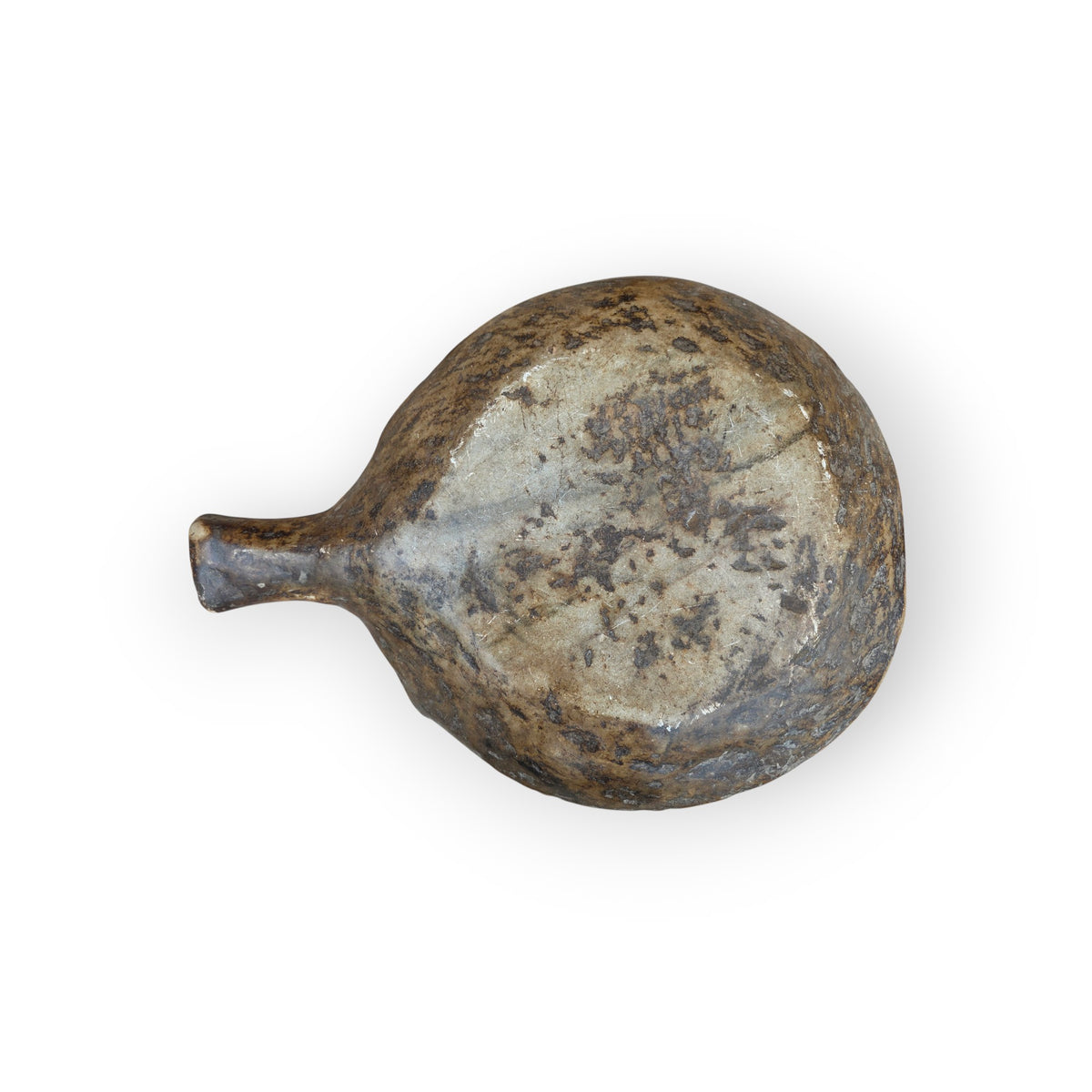
A rare and sculptural dough-kneading dish, or North Indian parat, of large proportions, carved from a single block of gypsum alabaster. It most probably comes from Rajasthan and dates from the late 18th or 19th century. The form is generous and shallow. A broad, gently sloped rim steps down to a central well, and a short, robust handle springs from one side to give a firm grip. Parats were a fixture of the North Indian kitchen, used to mix and knead the dough for chapati and roti. They were more commonly made of brass, copper, or wood, so stone examples are rare.
The material is unusual and telling. Gypsum alabaster is among the softest of carving stones and is slightly soluble in water. Years of daily kneading, washing, and wetting have eroded the working face into a constellation of soft-edged pits and hollows. The underside is far less affected and has settled to a mottled, smoky patina, with the handle end darkened from generations of handling. Held to a light, the stone glows with the soft translucency that has made alabaster prized since antiquity.
This is an object in which use and material have shaped each other. It is a humble domestic vessel transformed by time into something close to sculpture. It would make a striking centrepiece on a refectory table or kitchen dresser, or a quietly theatrical presence in a collection of vernacular stone and treen.
Provenance: Acquired from a Norfolk family, in whose possession it has remained for as long as living memory recalls. Family tradition holds that it was brought back from India by a great-great-grandfather who was stationed there under British rule.
Material: Alabaster.
Condition: Extensive dissolution pitting to the rim and well, consistent with long use and wetting. There is mottled staining and ingrained patina to the underside, scattered fine scratches throughout, and darkening and minor wear to the handle end. No breaks or restorations observed; however, there is a very historic hairline crack to the raised rim, approximately 8 cm in length. This is stable. As gypsum is soft and water-soluble, the dish is best kept dry and used for display only.
Dimensions: Length including handle 17⅞ in (45.5 cm); width 13¾ in (35 cm); depth 2 in (5 cm)
🚚✈️🚢 We ship worldwide!
You can buy with 100% confidence too!
We are a member of the following 4 Professional Associations:
1. LAPADA (London and Provincial Antique Dealers Association) – LAPADA is the UK’s largest trade association for professional art & antique dealers (representing approximately 500 UK dealer members). All items are backed by our LAPADA guarantee;
2. CINOA –Confédération Internationale des Négociants en Oeuvres d'Art, (or International Confederation of Art and Antique Dealers' Associations) is the world association of art & antique dealer associations (representing 5000 dealers from 32 associations in 22 countries);
3. The Norfolk & Suffolk Antique Dealers Association - Representing reputable, high quality antiques dealers based in Norfolk and Suffolk; and
4. FSB - Federation of Small Business.
Wish to purchase this item?
1. Buy online via this website; OR
2. Tel: 00 44 7551 383897 (line open 9.30 am to 5.30 pm Monday to Saturday UK time) where we can take payment over the phone.
Want further information about an item or wish to discuss shipping costs?
1. Email us via this website; OR
2. Email us via:
info@holtantiquefurniture.com
We will aim to respond and make contact with you within 24 hours of receipt of your enquiry.
🚚✈️🚢 Shipping & Customs Information
Please Note: Prices shown exclude customs clearance fees. Where applicable, these charges will be levied directly by your receiving courier, designated importer, or local government authority. These fees vary by destination and are the responsibility of the buyer. For guidance on potential charges, we recommend contacting your local customs office prior to purchase.